

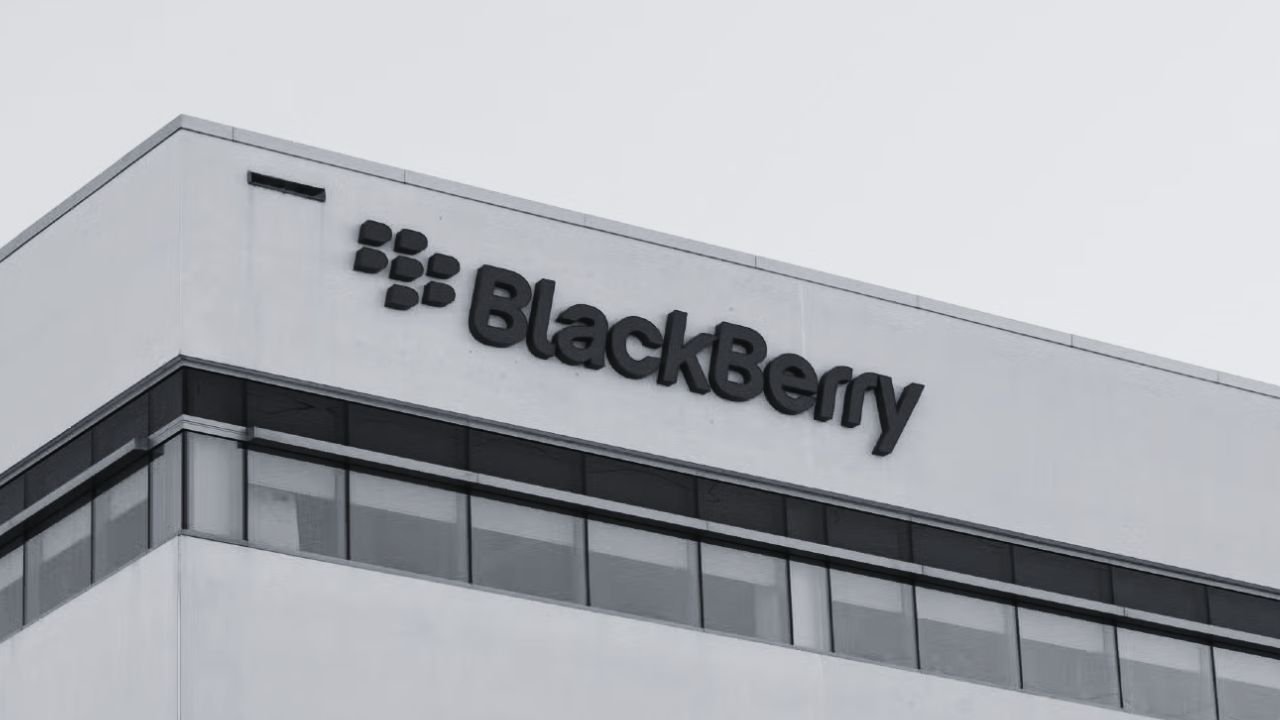
BlackBerry was once the most recognizable smartphone brand in the world. It was a fixture in corporate boardrooms, a tool of choice for executives, and a genuine status symbol for millions of users. Today, many people still search the internet trying to find out whether the company has shut down entirely.
The short answer is no — BlackBerry has not gone out of business. But the longer answer requires a clear distinction between BlackBerry the company and BlackBerry the phone maker. Those are two very different things now, and understanding that difference clears up most of the confusion.
This article explains what actually happened to BlackBerry’s smartphone business, what became of legacy devices, and what the company focuses on today.
BlackBerry Has Not Gone Out of Business — But It Is No Longer a Phone Company
BlackBerry as a company still exists. It has not declared bankruptcy, been liquidated, or shut down its operations. The business is active and continues to generate revenue.
The confusion comes from headlines that described BlackBerry “stopping phone production” or “exiting hardware.” To many readers, that sounds like a company closing its doors. In reality, it describes something different — a deliberate shift in business model, not a collapse.
The accurate way to put it is this: BlackBerry the company is still operating. BlackBerry the phone maker is not. Those two facts can coexist, and they do.
A useful way to think about it: imagine a well-known restaurant that permanently removes its signature dish from the menu and completely rebrands around a different concept. The business continues under the same name, the staff still shows up, and revenue still comes in — but the original product that made the brand famous is gone. That is essentially what happened with BlackBerry and its smartphones.
Outlets including Wired, CBC News, and Maclean’s all confirmed that BlackBerry exited the hardware business without shutting down as a company. The distinction matters, and it is worth stating plainly.
When and Why BlackBerry Stopped Making Smartphones
BlackBerry stopped designing and manufacturing its own phones in 2016. The decision was announced publicly and framed as a strategic move, not a last resort.
At the time, mobile hardware represented less than 10% of the company’s total value, according to BBC News Mundo. Continuing to build phones in-house was expensive, and the margin on hardware had become difficult to justify when compared to the potential upside of software and enterprise services.
Rather than shut down its phone line entirely, BlackBerry outsourced hardware development to third-party partners. For a period after 2016, BlackBerry-branded phones were still available for purchase — but BlackBerry itself was no longer the manufacturer. The company had handed off the physical production side to other firms while keeping the brand license.
Maclean’s described the hardware exit as a cost-reduction move intended to refocus resources on higher-margin software. CBC News and BBC News both confirmed that the in-house hardware operation ended in 2016, with the company shifting its attention toward enterprise software and services.
Why BlackBerry Lost Its Market Position
The root cause of the decline was a failure to adapt. When Apple introduced the iPhone in 2007, consumer expectations around smartphones changed rapidly. Full touchscreens became the new standard, and the broader industry followed.
BlackBerry’s core strengths — physical keyboards and secure enterprise messaging — were genuinely valuable, but they were not enough to hold market share as preferences shifted. The company was slow to move toward touchscreen-first designs, and by the time it attempted to compete, Apple and Android-based devices had already captured the market.
It was not purely a product failure. It was also a strategic one. BlackBerry held on to a formula that had worked brilliantly, while the market moved in a direction it was unprepared to follow at speed.
What Happened to Legacy BlackBerry Devices
Many people remember their old BlackBerry phones with a certain fondness — the tactile keyboard, the notification light, the BBM messenger. If you still have one of those devices, there is an important update you should know about.
On January 4, 2022, BlackBerry officially ended support for devices running BlackBerry OS, BlackBerry 10, and the PlayBook operating system. After that date, those devices no longer reliably function for calls, text messages, mobile data, or emergency 911 services.
This is not the same as BlackBerry shutting down as a business. What ended was the legacy infrastructure that those older operating systems depended on to function. Once that underlying support was switched off, the devices lost most of their core capabilities.
Think of it like this: the physical hardware still exists, but the services that made it work have been decommissioned. A BB10-era BlackBerry is now largely non-functional for everyday use — not because the phone broke, but because the network-level support it relied on is no longer there.
It is worth noting that this shutdown applied specifically to legacy BlackBerry OS, BB10, and PlayBook devices. According to Global News, Android-based BlackBerry-branded phones were not affected in the same way. The 2022 end-of-life date did not make every device with a BlackBerry logo non-functional — only those running the older proprietary operating systems.
BlackBerry’s Current Focus — Software and Cybersecurity
BlackBerry today is a software and cybersecurity company. That is not a casual description — it reflects what the business has formally repositioned itself around over the past several years.
The company’s products and services serve government agencies, financial institutions, and large enterprises that operate in environments where data security is a serious requirement. These are organizations that cannot afford breaches, and they are willing to pay for proven security infrastructure.
BlackBerry’s pivot to software was not a quiet retreat. It was announced publicly as a deliberate change in business strategy. The company was transparent about moving away from hardware in favor of higher-margin, recurring-revenue software services. That kind of transition is genuinely difficult to execute, but BlackBerry pursued it with intention.
The BlackBerry name still carries meaning in enterprise security circles, which is a meaningful asset. A brand built on secure communications has credibility in a market where security is the primary selling point. That brand equity did not disappear when the phones did.
For business owners and entrepreneurs trying to understand how companies navigate major transitions, this kind of strategic pivot offers some real lessons. When a core product loses its competitive edge, some businesses find ways to reposition around adjacent strengths rather than go down with a declining product line. Whether BlackBerry’s long-term performance justifies that shift is a separate question, but the mechanics of the pivot are worth studying. Resources like StartBizAdvice offer practical guidance for business owners thinking through similar strategic decisions.
Common Questions About BlackBerry, Answered Directly
Is BlackBerry bankrupt?
No. BlackBerry has not filed for bankruptcy and has not been liquidated. The company is operational.
Does BlackBerry still make phones?
No. BlackBerry stopped designing and manufacturing its own phones in 2016. Third-party partners produced BlackBerry-branded devices for a period after that, but no new BlackBerry phones are currently being produced.
Can an old BlackBerry still work today?
If the device runs BlackBerry OS, BlackBerry 10, or the PlayBook OS, it will no longer reliably function for calls, texts, data, or emergency services. Support for those systems ended on January 4, 2022. Android-based BlackBerry-branded devices were not subject to the same shutdown.
What does BlackBerry do now?
BlackBerry operates as a software and cybersecurity company, primarily serving enterprise clients, government agencies, and financial institutions with secure communications and mobility solutions.
The Bottom Line
BlackBerry is not going out of business. That question has a clear answer. The company that once defined what a business smartphone looked like has evolved into something its early users would probably not recognize — but it is still there.
What is gone is the phone hardware business. The physical keyboards, the BB10 operating system, the classic BlackBerry devices — those belong to a previous chapter. The brand that carried them has moved on to a different kind of business in a different kind of market.
For anyone who still owns a legacy BlackBerry, the practical reality is that the device is no longer reliably functional for everyday use. For anyone wondering whether the company collapsed — it did not. It changed, and there is a meaningful difference between the two.
Also Read:
- Is Orca Coolers Going Out of Business?
- Is Food Lion Going Out of Business?
- Is Rip Curl Going Out of Business?