

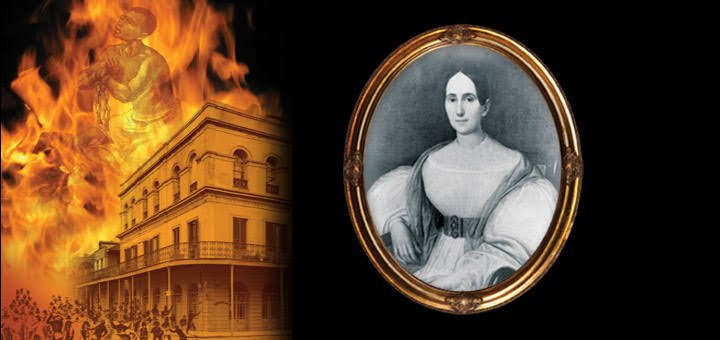
The name Louise Marie Laure Blanque comes up most often in genealogy searches and family-history databases. For most people who encounter it, the reason is simple: her mother was Marie Delphine Macarty, the woman history knows as Madame LaLaurie.
Louise herself does not have an independent public biography. She is not a historical figure in her own right. But understanding who she was, who her parents were, and where she fits in the family tree helps put the broader story of the Macarty-Blanque family in proper context.
This article covers what genealogy records say about Louise’s birth and family, who her parents were, how she fits among her siblings, and why the historical record on her own life is limited.
Who Louise Marie Laure Blanque Was
Genealogy databases, including FamilySearch and Geni, identify Louise Marie Laure Blanque as a daughter of Jean Blanque and Marie Delphine Macarty. Her listed birth year is approximately 1813, though dates in genealogy databases can carry inconsistencies and this should not be treated as a confirmed figure without a primary record such as a baptismal certificate.
She does not appear in any independently documented public biography. Her name surfaces almost entirely because of interest in her mother, Madame LaLaurie. In that sense, Louise is best understood as a historically searchable family member rather than a public figure in her own right.
The available records do not provide a detailed account of her adult life, later relationships, or descendants. Stating anything beyond what genealogy leads suggest would go further than the evidence supports.
Her Mother — Marie Delphine Macarty, Known as Madame LaLaurie
Most searches for Louise Marie Laure Blanque begin with curiosity about her mother. Marie Delphine Macarty is one of the most discussed figures in New Orleans history, though often for difficult and deeply serious reasons.
She went by several names across her life. She was born Marie Delphine Macarty (sometimes spelled MacCarthy). After her second marriage, she was known as Madame Blanque. After her third, she became Madame LaLaurie — the name most people recognize today.
Her birth year is disputed. Some sources give 1787; others give 1780. Neither date can be stated with certainty based on the available record. She was raised in New Orleans and belonged to the city’s wealthy French Creole social world, a community shaped by French, Spanish, and Caribbean influences.
Delphine married three times. Her first husband was Ramón de López y Angulo. Her second was Jean Blanque, Louise’s father. Her third was Louis LaLaurie, the man whose surname history attached to her permanently.
Her historical reputation is tied directly to the enslavement and documented abuse of enslaved people at her Royal Street mansion in New Orleans. This is a matter of serious historical record, not legend or entertainment. The suffering of the people she enslaved deserves to be acknowledged clearly and respectfully, not reduced to a curiosity or a ghost story.
Jean Blanque — Louise’s Father
Jean Blanque was Delphine Macarty’s second husband. Secondary sources place the marriage at around 1807 or 1808, though accounts differ slightly on the exact year. Louise’s surname comes directly from this marriage.
Secondary and genealogy-adjacent sources describe Jean Blanque as a New Orleans merchant, banker, and legislator. These descriptions come from non-archival sources, so they should be taken as useful context rather than fully verified biographical facts. He appears to have been a person of some standing in early 19th-century New Orleans, but detailed primary-record documentation is not readily available in the sources consulted for this article.
Jean Blanque died before Delphine became infamous for the events at the Royal Street mansion. Louise and her siblings therefore grew up in a household that changed considerably over time — first under the Blanque name, and later under the shadow of her mother’s third marriage and the notoriety that followed.
Louise Among Her Siblings
One of the more confusing aspects of researching Louise Marie Laure Blanque is the similarity of names within the same family. Genealogy records list several children from Delphine’s marriage to Jean Blanque, and the names overlap in ways that are easy to mix up.
The siblings identified in genealogy records from the Blanque marriage include:
- Marie Louise Pauline Blanque
- Marie Louise Jeanne Blanque
- Jean Pierre Paulin Blanque
Louise Marie Laure, Marie Louise Pauline, and Marie Louise Jeanne are three distinct individuals. Records should not be assumed to refer to the same person simply because the names share elements. This kind of conflation is a known problem in genealogy research, especially with families that used repeated naming conventions.
Delphine also had an older daughter from her first marriage to Ramón de López y Angulo. That child, Marie Delphine Francisca Borja, was a half-sibling to Louise and the other Blanque children. The children from the first marriage carried a different surname and came from a different family connection entirely.
When reviewing genealogy entries for any of these names, it is worth checking which marriage the record is attached to and whether the listed parents match Jean Blanque or Ramón de López y Angulo. A single name in a family-tree database is rarely enough to confirm identity without cross-referencing other details.
The New Orleans World Louise Was Born Into
Louise was born in early 19th-century New Orleans, a city unlike almost anywhere else in the United States at the time. It was a place of layered cultural influences — French, Spanish, African, Creole, Caribbean, and Irish — packed into a small, humid, and socially complex port city.
The family she was born into occupied a privileged position in that world. Wealth, property, and social rank in New Orleans Creole society at that time were deeply tied to the institution of slavery. That context matters when understanding the family’s place in history. It is not separate from who Louise’s mother was or what she later did.
For anyone researching this family through a historical or genealogical lens, resources like Startbizadvice can offer broader guidance on how to approach family-history research responsibly and with proper sourcing in mind.
Why the Historical Record on Louise Is Limited
Louise Marie Laure Blanque was not a public figure. She left no known independent record of public activity, professional life, or civic involvement that has been documented in the sources available today.
The genealogy entries that list her are useful starting points for family-history researchers. But a family-tree database entry is not the same as a primary record. Baptismal records, marriage registers, census documents, wills, and newspaper archives carry more evidentiary weight. Without those, any specific claims about her adult life, where she lived, whom she may have married, or what became of her would be speculation.
This does not mean her life was unimportant. It simply means that the public record, as currently accessible, does not preserve it in documented detail.
A Note on Genealogy Research and Name Confusion
If you are researching Louise Marie Laure Blanque, a few practical points are worth keeping in mind.
First, genealogy databases can carry copied or merged information. One incorrect entry can repeat across multiple platforms because users often pull from each other’s trees. Always look for a primary record to back up what a database entry claims.
Second, watch for name overlap. “Louise Marie Laure Blanque,” “Marie Louise Pauline Blanque,” and “Marie Louise Jeanne Blanque” are three separate people. A search result for one does not confirm information about another.
Third, Delphine Macarty appears in records under multiple surnames. Depending on which period of her life a record covers, she may be listed as Macarty, Blanque, or LaLaurie. Knowing all three names helps when tracing her children, including Louise.
Conclusion
Louise Marie Laure Blanque is a documented name in the family of Marie Delphine Macarty, the woman known to history as Madame LaLaurie. Genealogy records place her birth at approximately 1813 and identify Jean Blanque as her father. Beyond that, the publicly available record is limited.
Her story, such as it can be told, is mostly the story of a family — a complicated, historically significant, and at times deeply troubling one. Understanding her place in that family requires keeping names distinct, treating genealogy entries as leads rather than conclusions, and approaching the broader history of the LaLaurie household with the seriousness it demands.
She was one of several children born into a wealthy New Orleans Creole household in the early 1800s. That household, and especially its matriarch, left a mark on history that continues to draw researchers and curious readers today.
Also Read: