

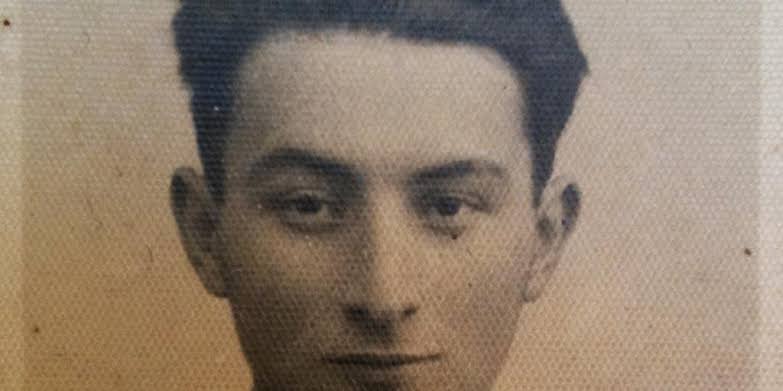
Most people who know the name Szpilman know it through Władysław — the Polish-Jewish pianist whose wartime survival became a celebrated memoir and film. Far fewer know about his brother Henryk, a lyricist, poet, and translator whose life and death are quietly woven into that same story.
This article covers who Henryk Szpilman was, his family background and creative career, what his life looked like under German occupation, and what ultimately happened to him during the Holocaust. His name still appears in genealogy databases and historical records, and he deserves to be understood as more than a footnote in his brother’s biography.
Who Henryk Szpilman Was
Henryk Szpilman was one of four siblings in a Polish-Jewish family originally from Sosnowiec, Poland. His brothers and sisters were Władysław, Regina, and Halina. According to the POLIN Museum, Henryk was born in 1915.
His parents were Estera Szpilman, née Rapaport, and Szmuel Szpilman. Culture.pl describes the family as musical, which helps explain why several of the siblings found their way into creative and artistic work.
The family eventually relocated to Warsaw, where the siblings lived together through the late 1930s and into the war years. Henryk is not the central figure in The Pianist — that memoir and the Roman Polanski film focus entirely on Władysław’s survival. But Henryk appears throughout the family story, and his fate is part of what makes Władysław’s survival so striking.
Henryk’s Career as a Lyricist, Poet, and Translator
Henryk worked across several creative fields during the interwar period. He wrote lyrics, composed, translated, and produced poetry. He was not confined to one profession, which was fairly common among Warsaw’s artistic community at the time.
He used the professional pseudonym Henryk Herold, particularly for tangos and satirical work. If you search his name and come up short, searching for Henryk Herold may surface more results — both names refer to the same person.
His output appeared in Polish popular culture during the 1930s, including songs performed by recognized singers and work associated with films. His career was solid and real, though it did not reach the same level of public recognition as Władysław’s. The available sources support a genuine interwar creative output, without overclaiming his fame.
His Collaboration With Władysław Szpilman
The two brothers worked together artistically on at least one documented project. Henryk wrote the lyrics for a song called “Piosenka zapomniana,” which Władysław composed. The song was performed by singer Janina Godlewska.
This collaboration carries more historical weight than it might seem. Godlewska later played a role in helping Władysław survive during the German occupation of Warsaw, when he was in hiding. The fact that Henryk had written lyrics for a song she performed shows how interconnected Warsaw’s artistic world was before the war — and how those connections later had real consequences.
The brothers’ collaboration reflects a family that operated creatively together, not in isolation from one another.
Henryk’s Life Under German Occupation
Before the occupation fully took hold, Henryk enrolled in philosophy at the University of Warsaw in November 1938, according to Culture.pl. His academic interests extended beyond his creative work.
When the German occupation began and conditions in Warsaw became increasingly restricted for Jewish residents, Henryk adapted. Władysław’s memoir describes Henryk teaching English in 1940 — a practical way to earn income when other opportunities had been shut off.
After the Warsaw Ghetto was established, Henryk turned to selling books. This was a common survival strategy under the ghetto’s severely constrained economic conditions. It was not glamorous, but it was practical.
The 1942 Arrest
In spring 1942, Henryk was arrested and held for one day. Culture.pl describes the likely reason as his public criticism of the Jewish police — a body widely resented within the ghetto for its role in enforcing German orders against fellow Jews.
It’s worth being careful here. The source presents this as the probable reason for the arrest, not as a formally documented legal finding. What is clear is that Henryk was not afraid to speak critically about what he witnessed around him, even under dangerous circumstances.
Deportation and Death
In August 1942, the mass deportations from the Warsaw Ghetto began. The German authorities were liquidating the ghetto, sending residents to the Treblinka extermination camp. The Umschlagplatz — the deportation assembly point from which Jews were loaded onto trains — became the last place many families stood together.
During this period, Henryk and his sister Halina were initially allowed to remain in Warsaw. Other members of the family had already been selected and taken to the Umschlagplatz. According to Culture.pl and other sources, Henryk and Halina made the decision to rejoin their family at the deportation point rather than stay behind without them.
That decision tells you something about who they were. Faced with a chance to remain, they chose not to leave their family alone.
The family was deported to Treblinka, where they perished. Władysław was the only member of his immediate family to survive. He was pulled from the deportation crowd and managed to escape, eventually hiding in Warsaw until the end of the war — a story documented in The Pianist.
Henryk’s death at Treblinka is confirmed by multiple historical sources, including Culture.pl, the POLIN Museum, and the official Szpilman website. No precise date or further detail is documented in the available record, and responsible accounts do not speculate beyond what the sources confirm.
Why Henryk Appears in Genealogy Searches
If you search for Henryk Szpilman today, you may find entries on platforms like MyHeritage or FamilySearch alongside museum and cultural history pages. These genealogy profiles can be useful starting points for research, but they vary in reliability depending on who submitted the data and what evidence they attached.
The more authoritative sources for Henryk’s life are the POLIN Museum’s published records, Culture.pl’s biographical pages, and the official Szpilman family website. When a genealogy entry gives a date or relationship, it’s worth checking it against one of those institutional sources before treating it as confirmed.
Henryk also appears under two searchable names: Henryk Szpilman and his pseudonym Henryk Herold. Searching both may help you find more of his creative work in historical archives.
For anyone interested in building a broader understanding of creative careers, family histories, and how public records intersect with personal legacy, resources like StartBizAdvice can offer useful guidance on how to research and document professional profiles responsibly.
What Henryk’s Story Adds to the Szpilman Legacy
It would be easy to let Henryk exist only as a background detail in his brother’s story. But he had his own career, his own opinions strong enough to get him arrested, his own academic interests, and his own creative voice under a pseudonym that some readers may still recognize.
His story also clarifies something important about Władysław’s survival. Władysław did not escape from a family that made it out together. He was the exception. His parents, his sisters, and his brother Henryk all died at Treblinka. That context gives the memoir and film a weight that is easy to miss if you don’t know who was lost alongside the story being told.
Henryk Szpilman lived through occupation, adapted, criticized what he believed deserved criticism, and in the end chose his family over his own safety. He deserves to be remembered on his own terms, not just as a name in someone else’s biography.
Also Read: