

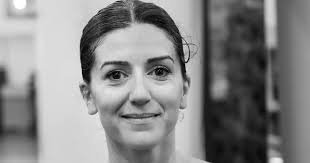
Many people first come across the name Ebru Cansız while reading about Turkish actor Ali Atay. But her story doesn’t begin or end with that connection. Cansız built her professional identity through years of classical ballet training, stage performance, and creative work in choreography and movement education.
This article covers what is reliably known about her professional background, her training, her work with the Istanbul State Opera and Ballet, her choreographic projects, and the reported timeline of her relationship with Ali Atay.
Who Is Ebru Cansız?
Ebru Cansız is a Turkish ballet dancer, soloist, choreographer, and dance educator. Her career is rooted in classical and contemporary dance, and she has worked within one of Turkey’s most established performing arts institutions.
Public interest in her name is largely connected to her former marriage to Ali Atay. That is a fair piece of context, but it does not define her professional life. Her training, her stage career, and her movement work all exist independently of that association.
Professional listings and Turkish media reports describe her as an accomplished performing artist with a structured career path spanning performance, choreography, and education.
Her Formal Ballet Training and Education
Cansız studied at the Classical Ballet Department at Mimar Sinan Fine Arts University in Istanbul. This is one of Turkey’s leading fine arts institutions, and graduating from its ballet program reflects a serious academic and artistic commitment.
According to reports from Turkish entertainment publications Mynet and Internethaber, she completed additional training at the Royal Academy in 1992. These are entertainment-media sources rather than primary academic records, so this detail is worth noting as reported rather than independently verified.
The same reports indicate she later pursued further study in classical ballet and modern dance in the United States in 1999. Taken together, her educational path shows a consistent investment in both formal training and international exposure to the craft.
This kind of combination — a strong domestic academic base plus international training — is common among serious professional dancers who want to develop their technique across different schools and traditions.
Her Career at the Istanbul State Opera and Ballet
Cansız is reported to have begun working with the Istanbul State Opera and Ballet from around 2000. From 2002 onward, she is listed as holding a soloist role within the institution.
The Istanbul State Opera and Ballet is one of Turkey’s most prominent classical performing arts organizations. Working there as a soloist represents a meaningful level of professional achievement within the Turkish dance world.
Her association with the institution is noted in her professional profile and referenced in Hürriyet, a major Turkish newspaper. However, it is worth being careful here: professional profiles and media listings can become outdated. What can be said with reasonable confidence is that she held a soloist role at the institution during this period — whether that affiliation continues in its current form is not something that can be confirmed without a recent official source.
Choreography and Movement Work Beyond the Stage
Cansız’s professional scope goes beyond solo performance. According to her Mynet profile, she has created choreography for productions by Semaver Kumpanya, a Turkish theatre company. The reported productions include Kuşlar and Semaver ve Kumpanya.
This kind of theatre choreography work places her in a cross-disciplinary space, connecting classical ballet technique to stage production in a broader sense. It is not unusual for dancers with strong technique backgrounds to move into creating movement for theatrical contexts, but it does reflect a deliberate expansion of her role in the performing arts community.
Her reported work also includes body awareness practices and dance drama — areas that sit at the intersection of ballet training, theatrical movement, and education. These are not fringe activities; they are increasingly recognized as important parts of performer training and audience development in the performing arts.
She is also reported to have collaborated with theatre performers on movement-related projects, which suggests connections across Istanbul’s performing arts community beyond the ballet world specifically. These details come from the Mynet profile, so they should be read as reported professional activities rather than fully confirmed institutional records.
Her Marriage to Ali Atay and What Is Publicly Known
This is the section most readers are likely looking for. Ebru Cansız and Ali Atay were reportedly married in 2008. Multiple Turkish media sources, including Hürriyet and Internethaber, report that they separated and divorced in 2013.
Ali Atay is a Turkish actor, musician, screenwriter, and director with a substantial public profile in Turkey. His work spans television, film, and music, and he is a well-known figure in the Turkish entertainment industry. That profile explains why coverage of his earlier marriage continues to generate reader interest years after the relationship ended.
After his divorce from Cansız, Atay later married actress Hazal Kaya, which brought renewed media attention to his personal history — including his earlier marriage. This is a familiar dynamic in celebrity media: a high-profile later relationship often draws attention back to earlier ones.
As for Cansız’s side of the story, the public record is thin. There is no confirmed public information about children from their marriage. Details about the reasons for the divorce, what happened afterward, or anything about her current personal life are not supported by reliable sources — and this article will not speculate on those points.
What can be said is that the marriage lasted approximately five years, that the divorce was widely reported in Turkish media, and that Cansız’s professional life in ballet appears to have been ongoing during and around the time of the relationship.
What Remains Unknown
There are several things that searches and entertainment-media articles often try to fill in about Cansız that simply are not supported by solid public sources.
- Her exact date of birth, age, and birthplace are not reliably documented in publicly available sources.
- Her current professional status at the Istanbul State Opera and Ballet cannot be confirmed without a recent official source.
- There is no confirmed information about children, remarriage, or significant changes to her personal life since 2013.
- Claims about the specific reasons for her divorce from Atay are not supported by documented reporting and should not be treated as fact.
This kind of honest acknowledgment matters. It is easy to find celebrity profiles that present rumor and estimation as established fact. For someone like Cansız, who is not a major public figure in her own right, that approach would be misleading.
Why Her Story Is Worth Knowing on Its Own Terms
It would be easy to write about Ebru Cansız solely as “Ali Atay’s first wife.” But that framing misses the actual substance of her public record. She trained seriously in classical ballet, earned a university degree in the discipline, undertook international study, performed as a soloist with a major national institution, and extended her work into choreography and movement education.
That is a coherent and accomplished professional profile. The marriage to a well-known actor is part of her public story, but it is not the whole story and arguably not even the most interesting part.
For readers who are curious about broader topics in professional development, creative careers, or the structure of performing arts institutions, resources like Startbizadvice offer useful perspectives on how professional paths develop across different fields.
Summary
Ebru Cansız is a Turkish ballet dancer, soloist, choreographer, and dance educator. She trained at Mimar Sinan Fine Arts University and reportedly completed additional study at the Royal Academy and in the United States. She worked with the Istanbul State Opera and Ballet from around 2000, advancing to a soloist role from 2002. Her work has extended into choreography for theatre productions and movement education.
She was married to Turkish actor Ali Atay from 2008 to 2013, according to multiple Turkish media sources. That connection explains why her name appears frequently in celebrity searches, but her career in dance stands independently of it.
Beyond these reported professional details and the confirmed public timeline of her marriage, little else about her private life is reliably documented — and that is worth respecting.
Also Read: