

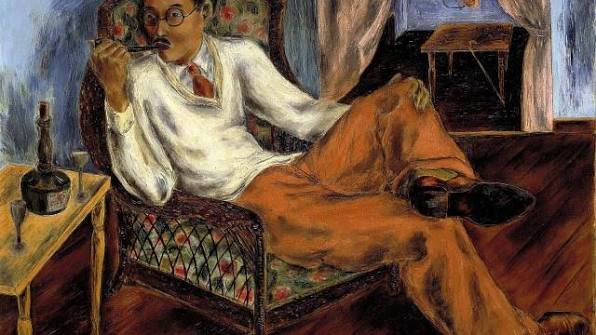
The name Mary Louisa Adams Clement shows up in Smithsonian museum records, presidential genealogy databases, and historical-art catalogs. Yet most people who search her name walk away with very little to show for it. She was not a modern celebrity, and she never sought public attention. But she left behind something real and lasting — a preserved collection of Adams-family history that now lives in one of America’s most important museums.
This article covers who she was, how she connected to the Adams presidential family, her work as an artist, and why her name still appears so regularly in historical and genealogy searches today.
Who Mary Louisa Adams Clement Was
Mary Louisa Adams Clement was an American artist and Adams-family descendant. She was born in Newbury, Massachusetts, in 1882. She died in Warrenton, Virginia, in 1950.
The Smithsonian American Art Museum identifies her as both an artist and a member of the extended Adams family. During her life, she lived in Washington, D.C., and was later associated with a property called Edge Hill in Warrenton, Virginia.
She was not a public figure in any modern sense. She did not hold political office, perform on stage, or build a business empire. What she did do was keep a remarkable family archive together — and eventually hand it over to the Smithsonian so that it would not be lost.
Her Place in the Adams Presidential Family
The Smithsonian describes Clement as a fifth-generation descendant of John Adams and Abigail Adams. That connection also links her, through the family line, to John Quincy Adams, the sixth president of the United States.
It is worth being clear about what fifth-generation means here. She was not the daughter, granddaughter, or great-granddaughter of either president. Several generations separate her from those famous figures. Her mother, Louisa Catherine Adams Clement, was born in 1856 — and the family continued carrying the Adams name forward through the generations, as many nineteenth-century families did.
The Smithsonian Institution Archives also confirms her descent from both John Adams and John Quincy Adams in connection with her 1950 donation. The relationship is real and documented, even if it is not a close one in terms of generations.
Mary Louisa Adams Clement and the Earlier Mary Louisa Adams — Two Different People
This is the part that trips up a lot of researchers. There is another “Mary Louisa Adams” in the historical record, and she is a completely different person.
The earlier Mary Louisa Adams was born in 1828 — inside the White House — while her grandfather, John Quincy Adams, was serving as president. She is a well-documented nineteenth-century Adams family member with her own history.
Mary Louisa Adams Clement was born in 1882. That is more than fifty years later. The two women shared a name but were not the same person.
The repeated use of the name is not a coincidence. Families in that era often named children after distinguished ancestors as a way of honoring the family line. The Adams family was no exception. Names like Louisa, Mary, and Adams itself appeared across multiple generations.
Here is where things get interesting, though. Clement was actually the person who preserved and donated portraits of the earlier Mary Louisa Adams to the Smithsonian. According to records from the Massachusetts Historical Society, portraits of the earlier Mary Louisa Adams and her sister descended through the family and eventually reached Mary Louisa Adams Clement, who presented them to the Smithsonian in 1950.
So the two women are connected — just not in the way that a quick search might suggest.
Her Work as an Artist
Museum records formally identify Clement as an artist. Her documented output includes at least one original work that is now part of the Smithsonian’s holdings.
Around 1910, she painted a watercolor portrait of her mother, Louisa Catherine Adams Clement. The portrait was done on ivory — a technique commonly used for small, detailed portrait miniatures in that period. The Smithsonian American Art Museum has this work in its catalog, and it is also documented in the AMICA/David Rumsey art archive.
This is not a nationally famous masterpiece. It is a family portrait, made with care, and it gives a quiet snapshot of the people in Clement’s immediate world. Its value is partly artistic and partly historical — it connects a named individual in the Adams family line to a real, preserved image.
Whether she created other works is not clearly established in the public record. What is confirmed is that she was identified as an artist, and that at least one of her pieces has survived and been cataloged.
The Adams-Clement Collection at the Smithsonian
Clement’s most significant public contribution was not her own artwork. It was the collection she preserved and eventually donated.
In 1950, she donated a substantial group of Adams-family materials to the Smithsonian Institution. The collection included paintings, jewelry, china, letters, and other family objects. The Smithsonian Institution Archives notes that the collection was formally opened in 1951, the year after her death.
The materials in the collection span multiple generations of the Adams family. Not everything in the collection was made by Clement — many items were inherited or passed down through the family over decades. Her role was to serve as the final custodian of these objects and to ensure they reached a national museum where they could be properly preserved and studied.
The collection is sometimes referred to as the Adams-Clement Collection in archival records. It reflects the kind of quiet historical preservation work that rarely makes headlines but matters enormously to researchers, historians, and genealogists.
It also includes the portraits of the earlier Mary Louisa Adams, mentioned above. The Massachusetts Historical Society’s Adams Papers confirm that those portraits traveled through the family line and were ultimately presented to the Smithsonian by Clement in 1950. That act alone would make her name worth remembering in any serious study of Adams-family history.
Why Her Name Still Appears in Searches Today
People come across Mary Louisa Adams Clement’s name for a few different reasons.
Genealogy researchers find her because she sits at an interesting point in the Adams family tree. She is a documented fifth-generation descendant of one of America’s founding presidents, and that kind of connection creates strong archival links across multiple databases.
Art historians and museum researchers find her because the Smithsonian catalogs her as an artist and lists her as the donor of a significant family collection. Her name is attached to multiple objects, which means she appears across several catalog entries.
People interested in presidential history sometimes find her while researching John Adams, John Quincy Adams, or the women in the Adams family. Because she preserved and donated portraits connected to those figures, her name turns up in searches for the artworks themselves.
None of this makes her famous in a traditional sense. But it does make her a recurring and legitimate figure in American historical records. If you found her name in a search and wondered who she was, the short answer is: a private woman who happened to carry one of the most storied names in American history, created at least one documented work of art, and made sure that a generation’s worth of family materials found a permanent home.
For anyone researching historical figures, family connections, or donated museum collections, resources like Startbizadvice can also offer broader context on how to navigate historical records and public archives effectively.
A Final Word
Mary Louisa Adams Clement lived a life that was mostly private. She left behind a portrait of her mother, a donation of family artifacts, and a name that echoes through presidential genealogy records nearly a century after her death.
She was not a head of state or a cultural icon. But she was a careful custodian of history — and the Adams-family materials she preserved are now part of the permanent record at one of America’s leading institutions. That is a real and meaningful legacy, even if it rarely comes with a spotlight.
Also Read: