

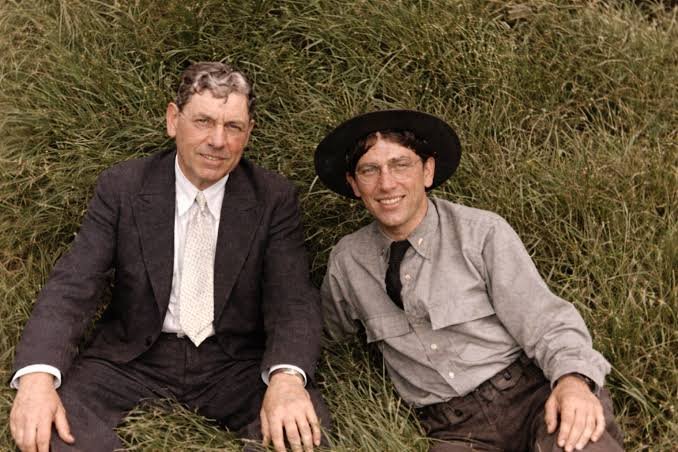
Most people can name at least one of the Three Stooges. But far fewer know the man who raised them — a quiet immigrant from Lithuania who worked in New York’s garment trade and never once stepped into a spotlight of his own.
His name was Solomon Horwitz. And while he was not a performer, his family became one of the most recognizable acts in American comedy history.
This article covers who Solomon Horwitz was, where he came from, what he did for work, who he married, and why his name still shows up in entertainment history and genealogy records today.
Who Was Solomon Horwitz?
Solomon Nathan Horwitz, also known as Sol Horwitz, was born in 1872 and died in 1943. He was the father of three members of the comedy act known as The Three Stooges: Shemp Howard, Moe Howard, and Curly Howard.
To be clear from the start — Solomon was never a Stooge. He never performed professionally, and he is not to be confused with any of his sons. His connection to entertainment history comes entirely through them.
His name appears today in genealogy databases, on IMDb, and in entertainment history records because his sons became cultural icons. Without that connection, Solomon would likely be unknown outside his own family tree.
From Kovno to New York — His Origins and Immigration
Solomon Horwitz was born on November 4, 1872, in Kovno — a city now known as Kaunas in present-day Lithuania. At the time, the region was part of the Russian Empire, which is why some historical records describe his origin in those terms rather than using a Lithuanian place name.
According to family history records, Solomon immigrated to the United States around 1890. He eventually settled in New York, with family connections to Brooklyn and the Bronx — neighborhoods that were home to large Jewish immigrant communities during that era.
His path was not unusual. Thousands of Jewish families left Eastern Europe during the late nineteenth and early twentieth centuries, many settling in New York and finding work in the city’s growing industries. Solomon’s story fits that broader pattern well.
His Marriage and the Horwitz Family
Solomon married a woman recorded in most sources as Jennie Mary Horwitz. Depending on the record, her name also appears as Jenne Mary Goldsmith or Gorovitz. This kind of variation is common in genealogy research from the immigration era, when names were frequently anglicized, misspelled, or inconsistently recorded by immigration officials.
Together, Solomon and Jennie had at least five sons. Their names, as recorded in genealogy sources, include Isidor (also listed as Irving), Benjamin, Samuel, Moses, and Jerome.
Not all of their sons went into entertainment. Available sources suggest that at least two of the brothers — Jack and Irving — were not involved in the entertainment industry.
The three who did become famous took very different names professionally:
- Samuel Horwitz became Shemp Howard
- Moses Harry Horwitz became Moe Howard
- Jerome Lester Horwitz became Curly Howard
A note on name spellings: “Solomon Horwitz,” “Sol Horwitz,” and “Solomon Horowitz” all refer to the same person. Similarly, “Gorovitz,” “Goldsmith,” and “Horwitz” in reference to his wife’s family name point to the same individual. These variations reflect the messy reality of immigrant-era recordkeeping rather than separate families or identities.
His Occupation in New York’s Garment Trade
Solomon Horwitz made his living as a fabric cutter in New York’s garment industry. According to his WikiTree genealogy profile, this was his recorded occupation.
This was a very common path for Jewish immigrants in early twentieth-century New York. The garment trade employed a large portion of the city’s immigrant workforce, and fabric cutting was a skilled role within that industry.
Solomon’s working life was private and conventional. There is nothing in the available records to suggest he had any connection to performance, vaudeville, or film — at least not in a professional capacity. The contrast between his trade work and the very public careers his sons built is part of what makes his story a useful piece of entertainment history.
It is also a reminder that behind many famous names, there are ordinary families simply trying to build a stable life in a new country.
His Sons’ Stage Names and Why the Horwitz Name Faded
When Samuel, Moses, and Jerome entered vaudeville and eventually film, they adopted a shared stage surname: Howard. It was shorter, easier for audiences to remember, and more marketable at a time when many performers used anglicized names for professional reasons.
As a result, the Horwitz name largely disappeared from public view. Few people who watched Three Stooges shorts in the 1930s and 1940s would have known the family’s real surname — or that their father was a garment worker from Lithuania named Solomon.
This is a familiar story in early American entertainment. Performers from immigrant backgrounds often changed their names as part of entering show business. The stage identity became the public one, while the family name stayed behind in the records.
For Solomon himself, that meant living quietly while three of his sons became nationally known figures — under a different name.
Did Solomon Horwitz Appear in Any Films?
This is a detail worth mentioning carefully. According to his WikiTree genealogy profile, Solomon Horwitz reportedly appeared uncredited in five films featuring his sons. The titles listed include Half Shot Shooters, False Alarms, Disorder in the Court, Grips, Grunts and Groans, and Dizzy Doctors.
However, this claim comes from a genealogy-based profile rather than a major film archive or studio record. It is possible that Solomon appeared briefly in these films, perhaps as an extra or as a background figure during production. But it would be inaccurate to describe him as an actor or a professional performer based on that alone.
If true, these appearances were almost certainly brief and uncredited — more of a family connection than a career move. They should be seen in that light rather than as evidence of a show business role.
His Final Years and Death
By the time Solomon Horwitz died, he was living in Los Angeles — a city his sons had moved to as their film careers with Columbia Pictures grew through the 1930s and 1940s.
He died in December 1943. The exact date varies slightly depending on the source: IMDb lists December 19, while some genealogy records give December 21. Rather than treat one date as definitive, it is more accurate to say he died in late December 1943, with the precise day remaining slightly unclear across available sources.
According to FamilySearch records, he was buried at Home of Peace Memorial Park in East Los Angeles — a cemetery with a long history of serving the Jewish community in Southern California.
He was around 71 years old at the time of his death.
Why Solomon Horwitz Still Appears in Celebrity Records
Solomon Horwitz was not famous in his own right. He was a working man who raised a family in New York after immigrating from Lithuania as a young man. His life, by most measures, was a private one.
But because three of his sons became enduring figures in American comedy, Solomon’s name has a permanent place in entertainment history records. Genealogy sites, IMDb, and family history databases all document him as part of the Stooges’ story — the immigrant father behind the famous faces.
For anyone researching the Three Stooges’ roots, or tracing Jewish immigrant family histories in early twentieth-century New York, Solomon’s record offers useful context. His story connects the broader immigration experience of that era to the very specific path his sons took into American popular culture.
Resources like StartBizAdvice often highlight how immigrant family backgrounds shape the careers and identities of later generations — and the Horwitz family is a clear example of exactly that kind of generational shift.
A Quiet Life Behind Famous Names
Solomon Nathan Horwitz arrived in America as a young man from Kovno. He found work, married Jennie, raised at least five sons, and spent his working years as a fabric cutter in New York’s garment trade. He was not an entertainer. He did not seek public attention.
Three of his sons did — and they found it in abundance, under the name Howard rather than Horwitz.
Solomon died in Los Angeles in December 1943, not long after his sons had become some of the most watched comedians in America. He left behind no famous performances, no public legacy of his own. What he left behind was a family — and through that family, a small but real place in the story of American entertainment.
Also Read: